 How-to
Residential Drywall Repair Service Quotes: 2026 Guide
Table of Contents
- What Residential Drywall Repair Service Quotes Should Include
- How to Request a Drywall Repair Estimate That Gets Accurate Numbers
- Drywall Repair Cost Per Square Foot: What Drives Your Total
- Questions to Ask a Drywall Contractor Before You Sign
- Drywall Repair Timeline: From Service Call to Final Coat
- Comparing Multiple Quotes Fairly (Without Getting Fooled)
- When DIY Repair Makes Sense and When to Call a Pro
- Conclusion
- Frequently Asked Questions
Last Updated: October 9, 2026
What Residential Drywall Repair Service Quotes Should Include
Residential drywall repair service quotes are written estimates that break down the labor, materials, and prep work needed to fix damaged walls or ceilings in your home. At The Drywall Expert, a quote is only useful if it is itemized.
Most homeowners ask the same question first: how much will this cost, and why do estimates land all over the place?
Line Items That Belong in Every Estimate
A complete drywall repair estimate should list each of these separately:
- Damage assessment and surface prep, including protection of floors and furniture
- Materials: drywall panels, joint compound, tape, screws, primer, and paint
- Repair labor, often shown as an hourly labor rate multiplied by estimated hours
Texture matching and paint are the two most commonly omitted items, and the two that make a patch visible if skipped.
Red Flags: Missing Details and Vague Totals
Watch for these warning signs when you compare estimates:
- A total with no breakdown at all
- No mention of texture matching on a ceiling or a visible wall
- No stated timeline
That last one is not a bargain. It usually means something was left out, and it will reappear as a change order once work begins.
How to Request a Drywall Repair Estimate That Gets Accurate Numbers
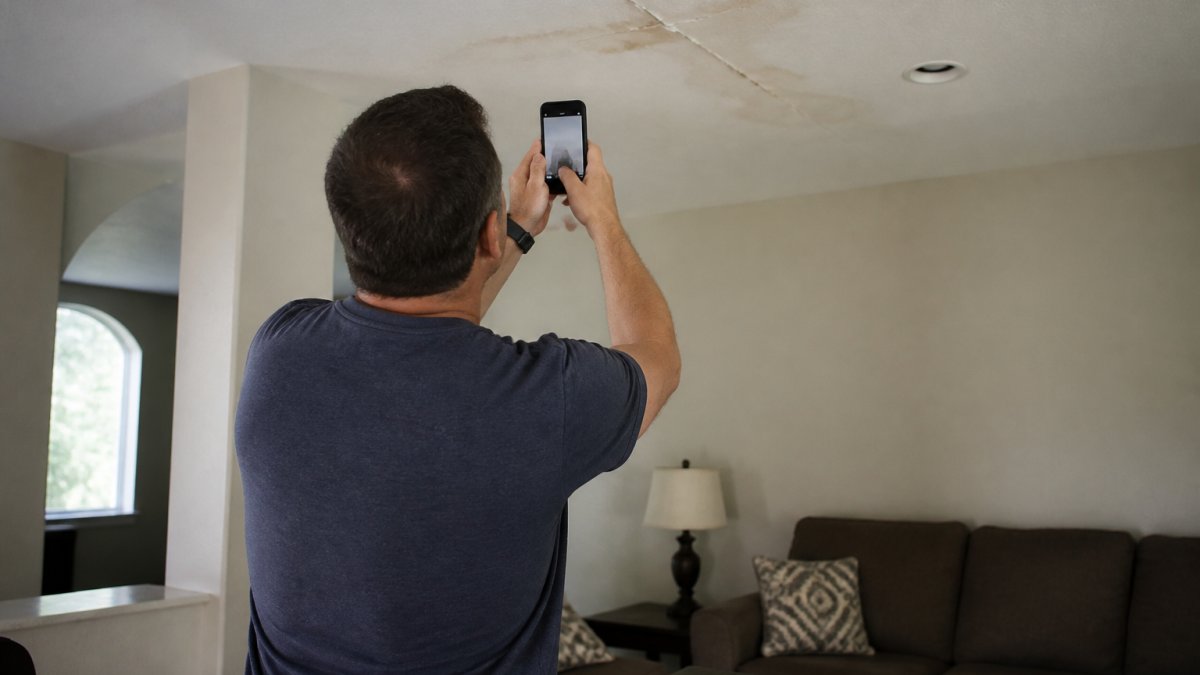
The fastest way to get an accurate drywall repair estimate is to send clear photos and rough measurements before anyone visits. Contractors who quote from a description alone either pad the number or lowball it and adjust later.
Photos and Measurements to Send Before the Visit
Send these four things with your quote request:
- A wide shot of the whole wall or ceiling, so the contractor can see where the damage sits in the room
- A close-up of the damage itself, in good light
- A measurement of the damage in inches, plus the height of the ceiling if the damage is overhead
- A note on the cause, if you know it, such as a roof leak, a doorknob impact, or a previous patch that failed
That last point matters more than people expect: a doorknob hole is a straightforward patch, but a returning crack usually points to movement or moisture behind the board, which changes the scope entirely.
Drywall Repair Cost Per Square Foot: What Drives Your Total
Drywall repair cost per square foot is not a single number. It is the product of damage size, complexity, location, and finishing work. Two repairs of the same size can price very differently, so the only way to know which drivers apply is to see them itemized on the quote.
Here is what actually moves the total:
| Cost Driver | Why It Matters |
|---|---|
| Damage size | Larger areas need more material and more finishing time |
| Location | Ceiling work and high walls need ladders or staging |
| Texture matching | Matching an existing finish takes extra skill and time |
| Cause of damage | Water damage may require the source to be fixed first |
| Access | Furniture, tight corners, and occupied rooms slow the work |
| Paint | Blending new paint into an existing wall color |
The Hidden Costs That Show Up After the Quote
The line items a quote leaves out turn a low bid into a surprise invoice. The most common omissions on residential drywall repair estimates:
- Minimum service charge. Many contractors set a floor price for any visit, so a two-inch nail pop can cost the same as a small patch because the trip itself is the expense. Ask whether a minimum applies before comparing small-repair bids.
- Texture matching. A structurally perfect patch can still be visible if the surrounding orange peel, knockdown, or smooth finish is not replicated. It is often a separate line, and skipping it is the most common reason a repair looks wrong after paint.
- Priming and painting. Some estimates stop at the dried patch and leave the paint to you. In a visible spot, budget for blending new paint into the existing color, which may mean painting the whole wall.
Why We Do Not Publish a Flat Per-Square-Foot Rate
Quoting drywall by the square foot alone leads to surprise charges, because square footage says nothing about texture, access, or whether the cause has been fixed.
Instead, every quote we write is itemized so you can see labor, material, and finishing separately. That structure makes two estimates comparable and lets you ask a specific question, "is texture matching included?", instead of guessing why one total is lower.
Questions to Ask a Drywall Contractor Before You Sign
Ask these seven questions before you sign anything. The answers tell you more than the price does.
- How long have you been doing this? Experience shows in texture matching, which is the hardest part of any repair.
- Will you match the existing texture? Get a yes in writing.
- Is the estimate itemized? Labor, materials, and finishing should be separate lines.
- Who does the work? Ask whether the crew is in-house or subcontracted.
- What is the project timeline? Get a start date and a completion date.
- Do you clean up afterward? Confirm that debris removal and floor protection are included.
- What is your guarantee? Ask what happens if the finished work does not look right.
That last question is the one most homeowners forget. A contractor who stands behind their work will answer it without hesitation.
Drywall Repair Timeline: From Service Call to Final Coat
A typical residential drywall repair runs from a few hours to several days, depending on damage size and finishing needs. Small patches are often done in a single visit; larger repairs, ceiling work, and anything needing texture and paint across a wide area take longer because of drying time between coats.
Here is a realistic sequence, with the mechanics behind each stage:
- Service call and assessment: same day to a few days out. The visit is where the contractor confirms what photos could not show, whether the board is soft, whether the crack is moving, and whether the cause has been addressed.
- Quote delivery: usually within a day or two of the visit. An itemized quote takes longer to write than a lump sum, a good sign, not a delay.
- Scheduling: often within a week for standard repairs. Ceiling work and larger jobs may push further out because they need more crew time and staging.
What Actually Stretches the Timeline
Calendar time is rarely about the repair itself. It is about drying, access, and scope changes:
- Drying between coats. Multiple thin coats, each dried and sanded, produce a smoother finish than one thick coat. That takes days, not hours, and it is not a corner worth cutting.
- Texture and paint blending. Matching an existing texture and blending paint into a wall that has aged or faded can require painting beyond the patch to avoid a visible halo.
- Cause remediation. If the damage came from a roof leak, a plumbing drip, or movement behind the board, the source has to be fixed before the drywall is closed up. Otherwise the repair fails and you pay twice.
If you are a real estate agent preparing a listing, tell the contractor your deadline at the quote stage. Timeline is far easier to solve before the work is booked than after. Ask for the start and completion dates in writing, and confirm which stages are on site versus drying time.
Comparing Multiple Quotes Fairly (Without Getting Fooled)
Comparing estimates fairly means comparing scopes line by line, not totals side by side. A lower total with fewer line items is not a better deal.
Work through each estimate and check:
- Does it list materials separately from labor?
- Does it include texture matching and paint?
- Does it state a timeline?
- Does it include cleanup and debris removal?
Any line item in one quote but not another is a question to ask, not a reason to pick the cheaper bid.
For larger projects, ask each contractor the same questions from the section above and compare the answers.
When DIY Repair Makes Sense and When to Call a Pro
DIY drywall repair makes sense for small cosmetic damage: a nail pop, a doorknob dent, a hairline crack under an inch. These are genuinely fixable with a patch kit and a weekend.
Call a professional when any of these apply:
- The damage is larger than a few inches across
- The crack keeps returning after you patch it
- There is a water stain, soft board, or a musty smell
- The damage is on a ceiling
The texture problem catches most DIYers. A patch can be structurally perfect and still look wrong, because matching an orange peel or knockdown finish by hand takes practice.
Conclusion
Getting a drywall repair quote that holds up comes down to preparation: clear photos, real measurements, and a contractor who itemizes every line.
At The Drywall Expert, we have been repairing and installing drywall in the Greater Sacramento area for over 20 years, and we write itemized estimates with free quotes, transparent pricing, and a focus on clean, precise work.
Get a free quote from The Drywall Expert and see exactly what your repair includes before you commit.
Frequently Asked Questions
What should a drywall repair quote include?
A complete residential drywall repair quote should list labor, materials, texture matching, and any painting or priming. It should also state the damage size being addressed, whether the price covers a five-foot crack or a three-foot ceiling crack, and whether cleanup is included. Ask for an itemized estimate rather than a single lump sum so you can compare quotes fairly and spot hidden costs before work begins.
How do contractors estimate drywall repair costs?
Contractors base estimates on damage size, location, project complexity, and accessibility. A small drywall hole patch takes less labor than a ceiling crack requiring scaffolding. Most use a combination of materials cost plus an hourly labor rate, then adjust for texture matching and paint. Some quote a flat rate per repair type. Request a detailed estimate that separates repair labor from materials so you understand exactly what you are paying for.
How long does a typical drywall repair take?
Most small residential repairs, like patching a drywall hole or fixing a wall crack, take two to four hours on site. Larger jobs such as ceiling repair after water damage may need multiple visits because joint compound must dry between coats. Your drywall repair timeline should account for drying time, texture application, and painting. Ask the contractor to confirm whether the repair is a single-day service call or a multi-day project before scheduling.
Should I get more than one quote for drywall repair?
Getting two or three quotes helps you compare competitive rates and catch outliers. One contractor may include texture matching and priming while another charges extra, so the lowest number is not always the best value. Ask each contractor the same set of questions about labor cost, materials cost, cleanup, and scheduling. A local contractor with transparent pricing and a detailed estimate is easier to compare than one who gives a verbal ballpark.