 blog
blog
Best Drywall Repair Services Sacramento: 2026 Cost Guide
Table of Contents
- What separates the best drywall repair services in Sacramento from the rest
- Drywall repair cost per square foot: what actually drives the number
- Drywall patch and texture services: why the patch is the easy part
- Repair, replace, or remodel: matching the service to the damage
- When to DIY a drywall patch and when to call a contractor
- Drywall problems that show up most often in Sacramento homes
- How to vet a drywall contractor: license, insurance, and cleanup promises
- Frequently Asked Questions
Last Updated: September 25, 2026
What separates the best drywall repair services in Sacramento from the rest
The best drywall repair services in Sacramento share three traits: they diagnose the cause before quoting a fix, they match existing texture so repairs disappear, and they protect your home while they work. At The Drywall Expert, we've handled water-damaged ceilings, popcorn ceiling removal, and full residential drywall installation across the Greater Sacramento area for over 20 years, and the pattern is always the same.
Drywall repair cost per square foot: what actually drives the number
Most guides on this topic dodge the question. They tell you to "call for a quote" and move on. That's not useful when you're trying to decide whether a repair is worth doing now or waiting until spring. Here's a transparent look at what actually drives the number, so you can sanity-check any estimate you receive.
| Damage Type | Typical Scope | Main Cost Driver |
|---|---|---|
| Nail pops and hairline cracks | Minor patching | Number of spots, single visit |
| Doorknob holes and dents | Patch and texture match | Texture complexity |
| Water-damaged ceiling | Cut out, replace, finish | Source repair and drying time |
| Popcorn ceiling removal | Full room skim coat | Room size, ceiling height |
| Large panel replacement | Drywall hanging and finishing | Access, insulation, paint |
The cost drivers, in plain terms
- Size and count of damaged areas. A single 4-inch hole is a one-visit job. Ten scattered nail pops across three rooms is a different job entirely, even though the total square footage is small.
- Cause resolution. If a leak is still active, no honest contractor will finish the wall. The repair is the last step, and the drying and source repair add time and cost before any board goes up.
- Texture complexity. Smooth walls are the cheapest to match. Orange peel and knockdown are moderate. Hand-troweled and heavy acoustic finishes take the longest to replicate and are the most likely to show a visible seam if rushed.
- Access and height. A ceiling repair over a staircase or a two-story foyer needs scaffolding or a lift. That's a real cost, not a markup.
- Paint and finish. Many estimates stop at primer. Confirm in writing whether paint is included, and whether the painter will match the existing sheen and color or just spot-prime.
How to read an estimate
A useful estimate names the scope, the texture method, the finish level, and the cleanup terms. If two quotes differ by hundreds of dollars, the difference is almost always in one of those four items, not in the labor rate. Ask each contractor to break the quote into materials, labor, texture, and paint so you're comparing like for like.
Drywall patch and texture services: why the patch is the easy part
A drywall patch is the process of cutting out damaged gypsum board, fitting a replacement piece, and securing it to the framing. Texture matching is the harder step: recreating the exact spray pattern, hand-troweled finish, or orange peel look so the repair blends into the surrounding wall.
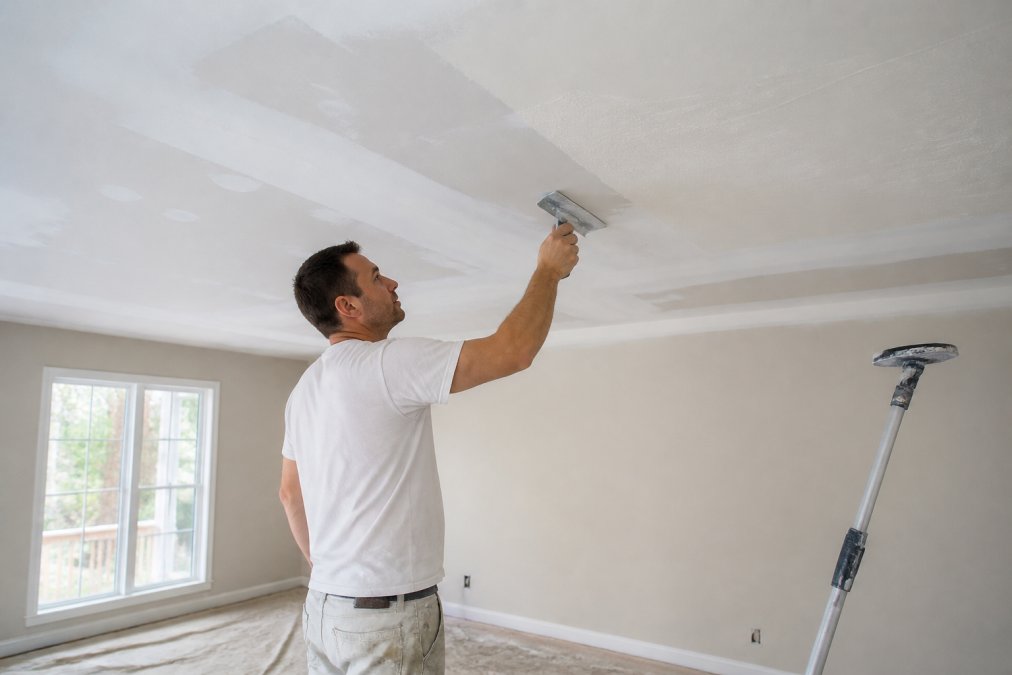
The full sequence runs like this:
- Cut the damaged section back to solid board
- Install backing and fit the new panel
- Tape seams and apply joint compound in thin coats
- Sand smooth and feather the edges
- Apply texture to match the surrounding surface
- Prime and paint the finished area
Repair, replace, or remodel: matching the service to the damage
Repair is right when the damage is contained and the cause is resolved. Replace when the drywall itself has lost structural integrity or the damage spans multiple panels. Remodel when the repair is an opportunity to change the space.
Here's how to decide:
- Repair for holes, cracks, nail pops, and isolated water stains under a few square feet
- Replace for sagging ceilings, crumbled board, or repeated water damage in the same spot
- Remodel for popcorn ceiling removal, added lighting, or a layout change you've been considering
When to DIY a drywall patch and when to call a contractor
DIY makes sense for small holes, nail pops, and hairline cracks in a smooth, untextured wall. Call a contractor when the damage involves water, texture matching, ceiling work, or anything larger than a dinner plate.
The real DIY cost, itemized
A patch kit, joint compound, tape, sanding sponge, and primer can run a modest amount at a home center, but that's only the start. Add a texture spray can if your wall isn't smooth, plus paint and a roller, and the material cost climbs. Then add your time: a small smooth-wall patch is an afternoon; a textured ceiling patch is a weekend, and the result often still shows under raking light.
- Small smooth-wall hole, one spot. DIY is often the cheaper path if you already own the tools and paint.
- Textured wall or ceiling. Professional work usually wins on cost once you factor in a failed attempt and the repaint.
- Water damage. Never DIY. The cause has to be fixed and the cavity dried before any board goes back up.
- Anything larger than roughly a foot across. The framing, backing, and finishing work push DIY past the point of saving money.
What the DIY path actually requires
If you're going to try it, know the sequence: cut the damaged section back to solid board, install backing, fit the new panel, tape the seams, apply joint compound in thin coats, sand smooth, feather the edges, apply texture to match, then prime and paint. Skipping the feathering step is the most common reason a DIY patch stays visible, the edges telegraph through the paint even when the patch itself looks flat.
Call a professional when:
- The drywall is wet, stained, or soft to the touch
- The ceiling is involved, since overhead work is harder and riskier
- The texture is anything other than smooth
- The damage is larger than roughly a foot across
- You've already tried a repair and it's visible
Drywall problems that show up most often in Sacramento homes
Water damage is the number one drywall problem in this region, and it almost always traces back to the same handful of sources: roof leaks, HVAC condensation lines, and plumbing failures in upstairs bathrooms.
- Ceiling stains from roof or HVAC leaks, often appearing well away from the actual source
- Hairline cracks at door and window corners, caused by seasonal movement
- Popcorn ceiling wear, where the texture flakes or yellows over time
- Nail pops, as framing lumber dries and shrinks
- Crumbling board behind tile or tub surrounds, from slow leaks that went unnoticed
How to vet a drywall contractor: license, insurance, and cleanup promises
In practice, the vetting conversation takes ten minutes:
- Confirm the license number and check it against the state board
- Ask for a certificate of insurance, current and in the company's name
- Get the scope in writing: what's repaired, what's painted, what's excluded
- Ask specifically who handles cleanup, and get it in the agreement
- Ask how texture matching will be handled and whether a sample is possible
- Confirm the timeline in writing, especially for a listing deadline
For real estate agents working against a listing date, ask for the completion date in writing and confirm who's responsible if the schedule slips. A repaired wall that isn't finished before photos is worse than an honest patch you disclose.
Frequently Asked Questions
How much does professional drywall repair cost in Sacramento?
Pricing depends on square footage, damage type, ceiling height, and whether texture matching is needed. A small patch costs far less than water-damaged ceiling replacement, and popcorn ceiling removal is quoted separately. Ask for a written, itemized estimate that lists labor, materials, texture work, and cleanup. The Drywall Expert publishes its pricing and offers free estimates, so you can compare quotes on the same scope rather than guessing.
What should I look for when hiring a drywall contractor?
Check for a valid contractor license, liability insurance, and a written scope of work before any deposit. Ask how they handle texture matching, whether cleanup and haul-away are included, and what happens if the finish does not match. Read reviews for comments about punctuality and tidiness, not just quality. A contractor with 20+ years in the trade, like The Drywall Expert, should be able to explain the repair sequence in plain terms.
Do drywall patch and texture services include matching my existing ceiling texture?
A proper patch and texture service should match the surrounding finish, not just fill the hole. That means feathering joint compound past the damaged area, sanding smooth, then replicating the existing texture pattern. Knockdown, orange peel, and acoustic textures each need a different technique. If a quote does not mention texture matching, ask directly, because an unmatched patch is visible even under fresh paint.
Is it better to patch drywall or replace the whole sheet?
Patch when damage is smaller than roughly a square foot and the surrounding board is solid. Replace the sheet when there is water damage, mold, or crumbling gypsum board, because patching over compromised material fails within months. Ceiling leaks and repeated cracking usually point to replacement. A contractor should inspect behind the wall or ceiling before recommending either option, and explain why the cheaper fix will or will not hold.
Drywall damage rarely gets better on its own, and a repair that ignores the cause will bring you right back to the same stained ceiling. The Drywall Expert brings over 20 years of experience to every job, with free estimates, senior and military discounts, and a working standard built on precision and a clean site at the end of each day. Get a free quote from The Drywall Expert and get your walls back to a finish no one can pick out of the room.