 blog
Finding Reliable Drywall Subcontractors in Sacramento
Table of Contents
- What Separates a Reliable Drywall Subcontractor From a Risky Hire
- Questions to Ask a Drywall Contractor Before You Sign Anything
- How to Read Drywall Contractor Estimates Without Getting Burned
- Drywall Contractor License and Insurance: What California Requires
- Drywall Subcontractor References: How to Check Them Properly
- Red Flags That Signal a Drywall Subcontractor to Avoid
- Frequently Asked Questions
Last Updated: October 12, 2026
What Separates a Reliable Drywall Subcontractor From a Risky Hire
Finding reliable drywall subcontractors in Sacramento starts with one hard truth: the difference between a smooth project and a nightmare rarely shows up in the bid price for drywall subcontractors. It shows up in how the crew communicates, how they protect your floors, and whether they return your call after the check clears.
At The Drywall Expert, we've worked the Greater Sacramento area for over 20 years, and we've seen every version of this story. A homeowner hires the cheapest bid, the seams crack within months, and the "contractor" stops answering his phone. The reliable operators look different up close.
A dependable drywall subcontractor is a licensed, insured trade professional who handles hanging, taping, finishing, and texture work on a defined scope, communicates clearly, and stands behind the finished surface. Reliability is a pattern of behavior, not a single great job.
Here's the pattern to look for:
- They ask about your schedule and access before quoting, not after
- They put the scope in writing, including texture matching and cleanup
- They carry a real license number you can verify in minutes
- They show up when they say they will, and they say so in advance when plans shift
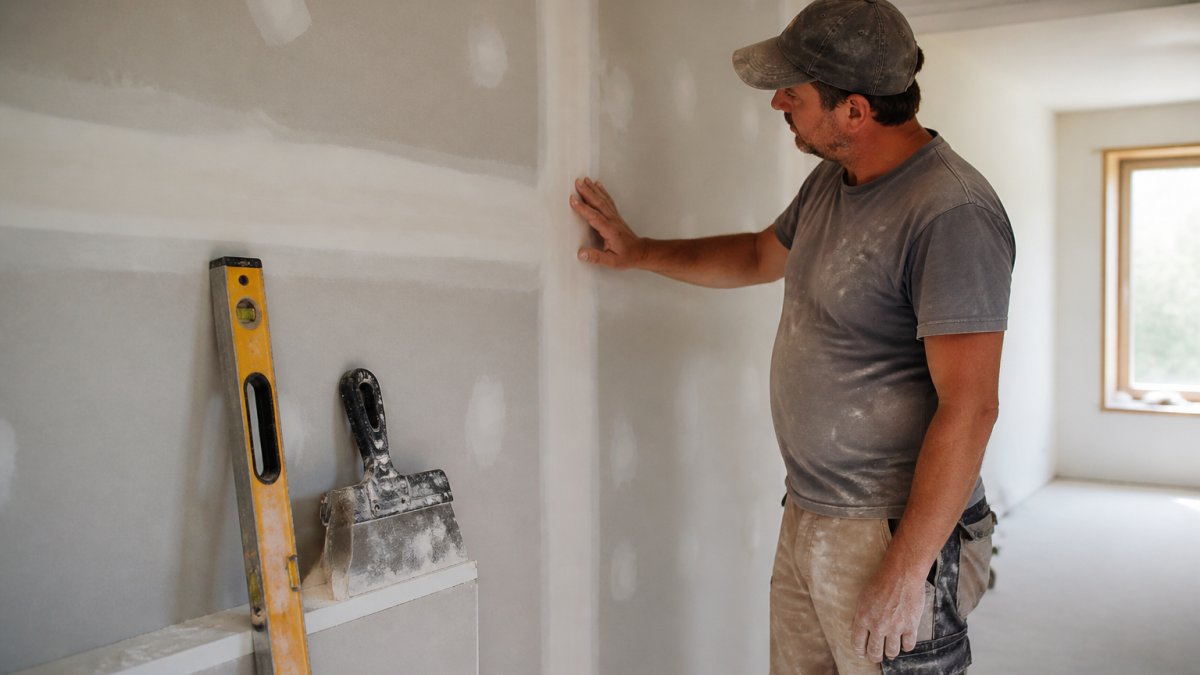
Most guides get this wrong. They treat reliability as a vibe you sense during the estimate. In practice, it's a checklist you can run before anyone picks up a trowel.
Questions to Ask a Drywall Contractor Before You Sign Anything
The right questions do two things at once: they tell you whether the contractor knows the trade, and they tell you whether they're comfortable being held to a standard. Vague answers to specific questions are your first red flag.
Run through these before you sign:
- "What's your license number, and are you insured?" A real contractor answers instantly.
- "Who's actually doing the work, your crew or day labor?" You want to know who walks through your door.
- "How will you match the existing texture?" Ceilings and walls rarely match perfectly, and a pro will explain how they blend it.
- "What's included in cleanup?" Plastic sheeting, floor protection, and hauling away debris should be spelled out.
- "What's your payment schedule?" Large upfront cash demands are a warning sign.
- "What happens if I'm not happy with the finish?" Listen for a clear answer about coming back to fix it.
That last question matters more than people expect. A contractor who hesitates on a call-back policy is telling you something.
If you're a real estate agent racing a listing deadline, add one more: "Can you commit to a completion date in writing?" Time pressure is exactly when vague promises hurt most.
How to Read Drywall Contractor Estimates Without Getting Burned
An estimate is a scope document, not a price tag. Two bids can land within a few hundred dollars of each other and cover completely different work. Reading the line items is how you compare them fairly.
The common mistake is comparing totals. Compare scope instead. One bid might exclude texture, another might exclude paint-ready finishing, and a third might quietly skip debris removal. The "cheapest" number often hides the most exclusions.
Line Items Every Estimate Should Include
A complete drywall estimate should list each of these separately so you can see what you're paying for:
| Line Item | What It Covers | Why It Matters |
|---|---|---|
| Materials | Drywall sheets, tape, joint compound, screws | Reveals thickness and board type |
| Labor | Hanging, taping, and finishing hours | Shows crew size assumptions |
| Texture matching | Orange peel, knockdown, or smooth finish | Easy to omit, hard to spot |
| Surface prep | Patching, priming, moisture checks | Skipped prep causes callbacks |
| Protection and cleanup | Floor covering, plastic, debris haul-away | Protects your home and schedule |
| Timeline | Start date and completion estimate | Sets expectations in writing |
Ask for the estimate in writing with the scope attached. A verbal quote is not an estimate; it's a guess you can't hold anyone to.
Drywall Contractor License and Insurance: What California Requires
Hiring an unlicensed contractor in California is a gamble with real consequences. The state requires anyone performing construction work valued above a set threshold to hold a contractor license, and drywall installation and repair fall under that umbrella. Licensing rules and thresholds change, so confirm current requirements directly with the California Contractors State License Board before you hire.
Insurance matters just as much. A legitimate drywall subcontractor should carry general liability coverage, and if they have employees, workers' compensation. Ask for a certificate of insurance and actually read the dates. An expired policy is the same as no policy.
Verification takes minutes:
- Look up the license number on the state board's website
- Confirm the license is active and matches the business name on the estimate
- Request a certificate of insurance and check the effective dates
- Ask whether workers' comp covers the crew on your job
If a contractor dodges any of this, walk away. There's no version of this where the answer gets better later.
Drywall Subcontractor References: How to Check Them Properly
Anyone can hand you three phone numbers. Checking drywall subcontractor references properly means asking questions that surface how a crew behaves when something goes wrong, because something usually does.
Call the references and ask:
- Was the final price close to the estimate? Watch for hesitation here.
- Did they finish on schedule? Ask how many days the job actually took.
- How did they handle problems? Every project has at least one.
- Did they clean up? This is where a lot of crews fall short.
- Would you hire them again? The pause before the answer says a lot.
Ask to see photos of completed work, especially texture matching on ceilings. Water damage repairs and popcorn ceiling removal both live or die on how well the new surface blends with the old.
For commercial or new-construction work, ask for a reference from a general contractor, not just a homeowner. GCs see how a drywall crew performs under deadline pressure, and they'll tell you plainly whether the sub is worth keeping on the schedule.
Red Flags That Signal a Drywall Subcontractor to Avoid
Some warning signs are loud. Others hide in plain sight during a friendly, confident sales pitch. Learn to spot both.
Watch for these:
- Cash-only demands with a big upfront payment. Legitimate operators use normal payment schedules.
- No physical business address or license number. Both should be easy to provide.
- Pressure to decide today. Urgency is a sales tactic, not a service.
- No written contract or scope. Verbal agreements protect nobody.
- Unwillingness to provide insurance proof. This is non-negotiable.
- Extremely low bids. Someone is cutting corners somewhere.
- No interest in matching your existing texture. A sign they plan to patch and run.
One more signal that's easy to miss: a contractor who won't let you speak to a past client. References are the cheapest form of due diligence you'll ever run, and a pro is happy to provide them.
At The Drywall Expert, we've built our reputation on the things that show up on this list: showing up on time, protecting your home, and cleaning up after ourselves. Our customers mention it constantly, and it's the reason we get called back.
Frequently Asked Questions
How do I find a reliable drywall subcontractor?
Start by asking general contractors, real estate agents, and neighbors who they have used and would hire again. Then verify each candidate's license through the California State License Board, confirm they carry general liability and workers' compensation insurance, and request at least three references from projects similar to yours. A reliable drywall subcontractor will answer these requests without hesitation and provide documentation quickly. The Drywall Expert has served the Greater Sacramento area for over 20 years and offers free estimates.
How can I verify a drywall contractor's license and insurance?
In California, check the contractor's license number on the California State License Board website to confirm it is active and covers drywall work. Ask for a certificate of insurance showing general liability coverage and workers' compensation. Call the insurance company directly to confirm the policy is current, not just a copy of an old certificate. Any legitimate drywall contractor will provide these documents before work begins. If a subcontractor cannot produce them, walk away.
What should a drywall subcontractor's estimate include?
A complete estimate should list labor and materials separately, specify the thickness and type of drywall, note whether texture matching is included, state the number of coats of joint compound, and outline cleanup and disposal. It should also include the project timeline and payment schedule. Vague estimates that only show a lump sum make it hard to compare bids. Ask for a written scope of work so you know exactly what is covered. The Drywall Expert provides free, detailed estimates for projects across the Greater Sacramento area.
What are signs of poor drywall workmanship?
Visible seams, nail pops, uneven texture, cracks along joints, and a wavy surface when you run your hand across the wall are common signs. Poorly sanded areas or dust left behind after the job also indicate rushed work. Check corners and ceiling edges carefully, since these are the hardest areas to finish well. If a drywall subcontractor's previous work shows these issues in their references' homes, look elsewhere. Quality work should look seamless and match existing texture.
Finding a drywall subcontractor you can trust comes down to verification, not intuition. Check the license, read the estimate line by line, call the references, and trust the pattern you see. When you want a crew that treats your home with respect and stands behind the finish, The Drywall Expert offers free estimates, over 20 years of experience, and senior and military discounts across the Greater Sacramento area. Get a free quote and see what a clean, on-time drywall job actually looks like.