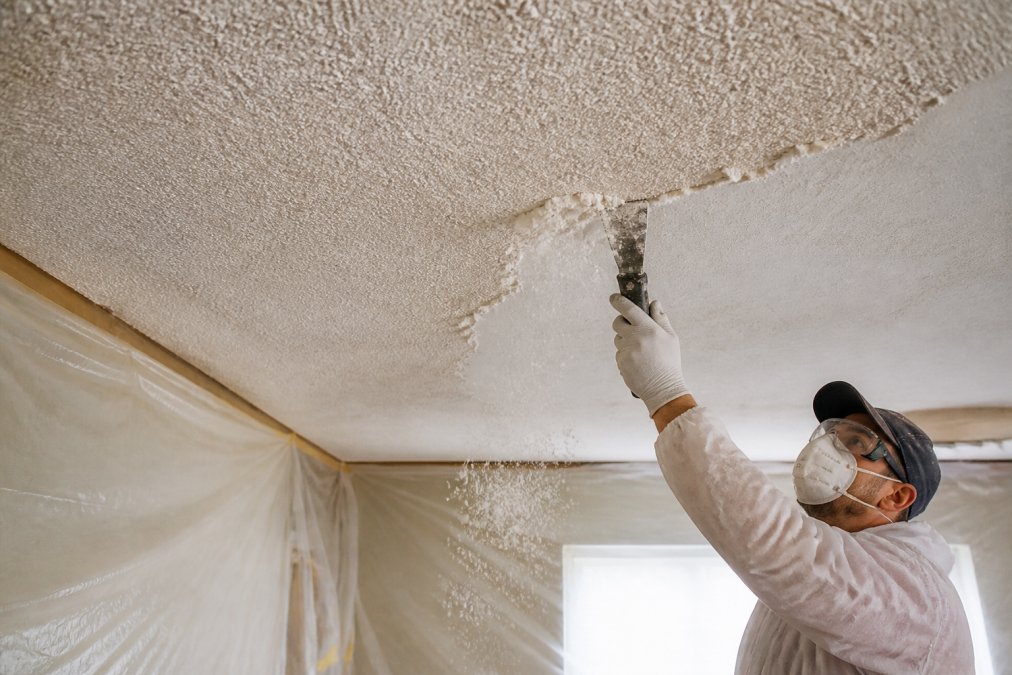
 ultimate-guide
Popcorn Ceiling Removal Service Cost: 2026 Guide
Table of Contents
- Average Cost Per Square Foot for Popcorn Ceiling Removal
- Factors Affecting Popcorn Ceiling Removal Cost
- Asbestos Testing for Popcorn Ceilings: Cost and Safety
- DIY vs. Professional Removal: Cost and Outcome Comparison
- Popcorn Ceiling Removal Time Estimate and Project Timeline
- Cost to Skim Coat Ceiling After Popcorn Removal
- Hidden Costs and Site Conditions That Increase Removal Expenses
- Getting Your Free Estimate
- Frequently Asked Questions
Last Updated: September 27, 2026
Average Cost Per Square Foot for Popcorn Ceiling Removal
Professional popcorn ceiling removal service cost varies based on project scope, substrate condition, asbestos presence, labor availability, and regional factors.
Quotes vary based on drywall repair needs after removal. Square footage is the primary cost driver; larger ceilings benefit from economies of scale, while smaller rooms have higher per-square-foot costs due to fixed setup fees.
What matters most isn't just removal, it's what happens after. Once texture comes off, you're left with raw substrate needing finishing, where hidden costs emerge for homeowners who underestimate the true scope of a popcorn ceiling removal service cost project.
Finishing work determines final expense more than scraping. Paint application costs far less than skim coating for a smooth finish. Understanding this distinction helps you budget accurately.
Factors Affecting Popcorn Ceiling Removal Cost
Several variables influence popcorn ceiling removal service cost. Substrate condition is critical, damaged, water-stained, or soft drywall requires repairs before finishing, transforming a straightforward removal into a complex project.
Ceiling height affects labor time and equipment. Vaulted or cathedral ceilings require scaffolding and specialized safety equipment, increasing contractor pricing.
Texture type matters, adhesion strength varies, affecting scraping duration. Older spray-applied textures may require different removal techniques than newer applications.
Site accessibility influences costs. Ceilings above finished flooring or valuable furnishings require extensive drop cloths and containment protocols, costing more than basement ceilings.
Obstacles like light fixtures, ceiling fans, HVAC vents, and sprinkler heads add labor time. Each must be carefully worked around or temporarily removed and reinstalled.
Regional labor rates vary based on local market conditions, experience levels, and demand.
Asbestos Testing for Popcorn Ceilings: Cost and Safety
Asbestos testing is essential for homes built before 1989. Many older popcorn finishes contain asbestos fibers, posing severe respiratory hazards when disturbed. Professional testing identifies hazardous materials before removal begins.
A professional collects samples from multiple ceiling areas, and a certified lab analyzes them. Results typically arrive within days.
If asbestos is confirmed, hire licensed abatement professionals. Specialized containment, air filtration, and disposal procedures are legally and ethically required.
The EPA and OSHA maintain strict guidelines about asbestos handling. OSHA's asbestos standards for construction detail the mandatory protocols for any work involving asbestos-containing materials. Contractors who cut corners on safety face fines and potential liability, and your home remains contaminated.
Skipping testing creates greater expense and legal liability later. Undisclosed asbestos issues expose you to buyer lawsuits for remediation costs.
Asbestos testing is modest insurance protecting your health, property value, and legal standing.
DIY vs. Professional Removal: Cost and Outcome Comparison
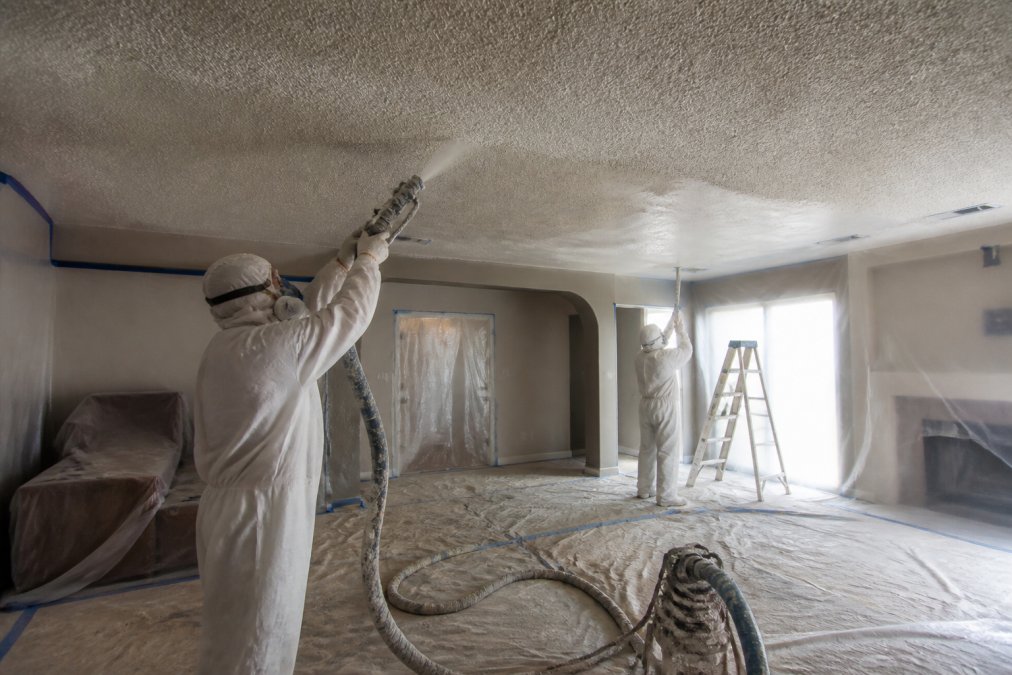
DIY removal seems cost-effective but introduces risks that often exceed labor savings.
Containment is the first challenge. Popcorn texture becomes fine dust settling throughout your home. Professional contractors use plastic sheeting, negative air pressure, and HEPA filtration. DIY approaches result in dust on furniture and in HVAC systems, with cleanup costs offsetting labor savings.
Working overhead requires proper scaffolding, not ladders. Ladder work is unstable and exhausting, leading to mistakes and falls. Professional crews have proper equipment and safety experience.
Scraping is physically demanding overhead work. A 400-square-foot ceiling can take 20-30 hours for someone without experience.
Outcome quality justifies professional removal. Professionals evaluate substrate condition, repair damage, and apply finish coats creating uniform appearance. DIY finishing often results in visible seams and uneven texture.
Professional removal from the start costs less than fixing DIY mistakes later.
| Approach | Labor Cost | Material Cost | Timeline | Outcome Quality | Hidden Risks |
|---|---|---|---|---|---|
| DIY Removal | Minimal | $100-300 | 20-40 hours | Often poor | Dust contamination, falls, incomplete finishing |
| Professional Removal | Higher upfront | Included | 1-3 days | Consistent, finished | Contractor selection, warranty clarity |
Professional removal costs more initially, but you receive a finished ceiling ready for paint or further customization. You avoid the physical strain, containment complications, and finishing challenges that derail most DIY attempts.
Popcorn Ceiling Removal Time Estimate and Project Timeline
Most residential removal projects take 1-3 days from start to finish, depending on ceiling size and condition.
Initial assessment takes 1-2 hours and determines whether additional repairs are needed and what finishing approach suits your space.
Scraping depends on ceiling size and texture adhesion. A 300-square-foot ceiling might take 6-8 hours; larger ceilings or stubborn texture can extend to 12-16 hours across two days.
Drywall repair and surface preparation follows removal. Minor repairs take a few hours; extensive damage requires a full day of patching and sanding.
Finishing work adds another day or two depending on finish level. Paint-ready finishes take less time than smooth skim coats requiring multiple passes.
Contractors schedule removal as a concentrated project, keeping your space contained and allowing efficient progression to finishing. Final cleanup happens before work concludes.
Timeline depends on ceiling height, obstacles, and accessibility. Your contractor should provide a realistic estimate based on your specific space.
Cost to Skim Coat Ceiling After Popcorn Removal
Skim coating is the most popular finishing option, creating a smooth, uniform surface ready for paint. Many homeowners find total project cost increases beyond initial expectations here.
Skim coating applies thin joint compound requiring consistent thickness and feathered edges. Rushed or inexperienced work results in visible ridges and uneven texture.
The process typically requires multiple passes. The first coat fills imperfections and creates a base layer. Subsequent coats are sanded between applications to achieve smoothness. Most ceilings need 2-3 coats to reach a truly smooth, level 5 finish, the highest standard for drywall finishing.
Drying time between coats affects the project timeline. Joint compound needs adequate drying before sanding and the next coat. Temperature and humidity influence drying speed, so seasonal timing matters. Summer heat speeds drying; winter cold slows it considerably.
After the final skim coat is sanded smooth, the ceiling is primed and painted. This final step unifies the appearance and provides a finished look. Many homeowners choose to paint their newly finished ceiling to match existing walls or create a fresh, cohesive appearance.
The cost to skim coat ceiling surfaces varies based on ceiling condition, size, and the finish level you want. A straightforward skim coat on a ceiling with minor imperfections costs less than one requiring extensive filling and multiple passes. Your contractor can provide a specific estimate after evaluating your ceiling's condition.
Hidden Costs and Site Conditions That Increase Removal Expenses
Most homeowners focus on the obvious removal cost but overlook the variables that push projects over budget. Understanding these hidden costs helps you anticipate realistic expenses and avoid surprises.
Water damage and staining often hide above popcorn ceilings.
Getting Your Free Estimate
The best way to understand your actual popcorn ceiling removal service cost is to request estimates from qualified contractors who can evaluate your specific ceiling and site conditions. A free estimate should include detailed breakdowns of removal, repair, finishing, and any additional work your ceiling requires.
Frequently Asked Questions
How much does it cost to remove a popcorn ceiling of 1,000 square feet?
Popcorn ceiling removal service cost depends on several variables including local labor rates, asbestos testing requirements, ceiling condition, and whether finishing work like skim coating is included. Rather than guessing at a total, we recommend requesting a free estimate from a professional contractor who can assess your specific project. The Drywall Expert provides no-obligation quotes that account for your exact square footage and site conditions.
Does popcorn ceiling removal require asbestos testing?
If your popcorn ceiling was installed before 1980, asbestos testing is strongly recommended before removal begins. Many popcorn ceilings from that era contain asbestos, a hazardous material that requires specialized abatement protocols. Testing typically costs between $400-$800 and identifies whether your ceiling contains asbestos, allowing you to plan safe removal.
What factors increase the cost of popcorn ceiling removal?
Several factors impact your final bill: ceiling height (vaulted or cathedral ceilings cost more), square footage, asbestos presence and abatement needs, water damage or hidden repairs, HVAC protection requirements, disposal fees, and finishing work like skim coating or painting. Rooms with complex layouts, low clearance, or difficult access also increase labor time. A detailed site inspection helps contractors identify these cost drivers before providing an accurate estimate.
How long does professional popcorn ceiling removal typically take?
A typical popcorn ceiling removal time estimate ranges from 1-3 days for a standard residential project, depending on square footage and complexity. A 1,000 sq ft ceiling usually takes 2-3 days with proper surface preparation, protection, scraping, cleanup, and finishing. If asbestos abatement is required, the timeline extends significantly due to safety protocols. Your contractor should provide a specific timeline after assessing your ceiling condition and project scope.
Can you match the existing texture after popcorn removal?
Yes, professional contractors can match or create new ceiling finishes after popcorn removal. Common options include skim coating for a smooth level 5 finish, knock-down texture, or orange peel texture. Matching existing texture requires skill and experience, this is why DIY attempts often look obvious. The Drywall Expert specializes in precision ceiling finishing that blends seamlessly with your home's existing aesthetic.
Is popcorn ceiling removal worth the cost?
Removing popcorn ceilings improves aesthetics, makes cleaning easier, and can increase home value for buyers who prefer modern finishes. However, the decision depends on your budget, timeline, and long-term plans. If you're selling your home or planning to stay long-term, removal often pays for itself. If budget is tight, a fresh paint over existing popcorn is a lower-cost alternative. A free estimate helps you weigh the investment against your goals.