 How-to
Drywall Repair for Seniors on a Budget: 2026 How-To
Table of Contents
- Why Drywall Repair for Seniors on a Budget Is Different
- DIY Drywall Repair Tools You Actually Need
- How to Patch a Small Hole in Drywall
- What Drywall Repair Cost Really Depends On
- Repair or Replace? Deciding on Drywall Replacement
- Senior Home Repair Assistance and Grant Eligibility
- Staying Safe and Steady During Repairs
- Frequently Asked Questions
Last Updated: October 18, 2026
Why Drywall Repair for Seniors on a Budget Is Different
Drywall repair for seniors on a budget is the practice of fixing cracks, holes, and water damage in walls at low cost while keeping the work safe for older hands, eyes, and backs. At The Drywall Expert, owner Chris Gonzalez has mastered the drywall trade since 1999, and the needs are genuinely different. Fixed incomes leave little room for surprise costs. Ladders get risky.
The good news: most small wall repairs cost more in worry than in materials. A tube of repair paste, a scrap of drywall, and a little patience cover a lot of ground.
Cosmetic Damage vs. a Bigger Problem
Before you spend a dime, sort the damage into two buckets. Cosmetic damage is surface-level: hairline cracks, nail pops, scuffs, and small dents. Bigger problems show different signs:
- Cracks that keep coming back after patching
- Soft or crumbly drywall when you press it
- Brown rings or stains that spread after rain
- Bubbling paint or a bulge behind the wall
- Any moisture you can feel with your hand
If you spot water damage, stop. Paint over a leak and it returns within months. According to U.S. EPA guidance on moisture and mold, damp drywall creates conditions for mold growth fast, so fix the source first. That distinction matters more than any tool you buy.
DIY Drywall Repair Tools You Actually Need
A short, honest tool list beats a full aisle of gadgets. Here is what covers most minor repairs:
- Putty knife (a 3-inch and a 6-inch blade)
- Joint compound or lightweight spackle
- Drywall patch or a scrap of drywall
- Sandpaper (medium and fine grit)
- Primer and paint matched to your wall
- Dust mask and safety glasses
- A stable step stool with a handle
Skip the fancy kits. A common mistake is buying a giant bucket of compound for a hole the size of a coin. Small tubs cost less and stay fresh.
A Senior-Friendly Shopping List
Most guides hand you a tool list and stop. The useful part is knowing what to buy, how much, and what you can skip. Here is a practical list for a single small repair, with quantities sized to the job.
- Joint compound: one 1-quart tub. Enough for several small patches; do not buy the 4.5-gallon bucket.
- Mesh patch: one small roll or a pack of 4-inch squares. One patch per hole.
- Putty knives: one 3-inch and one 6-inch. The 3-inch presses compound into the hole; the 6-inch feathers the edges.
- Sanding sponge: one fine-grit and one medium-grit. Sponges are easier to grip than sandpaper blocks.
- Primer: one quart. A small can covers several patches.
- Paint: one quart matched to your wall. Ask the paint desk to match a chip you bring in.
- Dust mask and safety glasses: one each. Buy a mask with a flexible nose clip so it seals over glasses.
- Drop cloth: one. Old sheets work fine.
What you can skip: power sanders (too aggressive for small patches and hard to control), corner tools, and large compound buckets. If you already own a putty knife and sandpaper, your out-of-pocket cost drops to the patch, compound, primer, and paint.
Safety and Accessibility for Older Adults
Safety is the part most guides skip, and it matters most for older bodies. A fall off a step stool ends the project and the budget at once. Work at ground level whenever you can, and get help for anything above shoulder height.
A short safety checklist:
- Use a step stool with a handle, never a chair
- Keep the floor clear of tools and dust
- Wear a dust mask and glasses when sanding
- Take breaks every 20 minutes
- Ask someone to spot you on any ladder work
- Keep a phone within reach
Dust control matters too. Sanding compound sends fine dust into the air, and older lungs tolerate it less well. Seal the doorway with a towel, open a window, and wipe surfaces with a damp cloth instead of dry-brushing.
How to Patch a Small Hole in Drywall
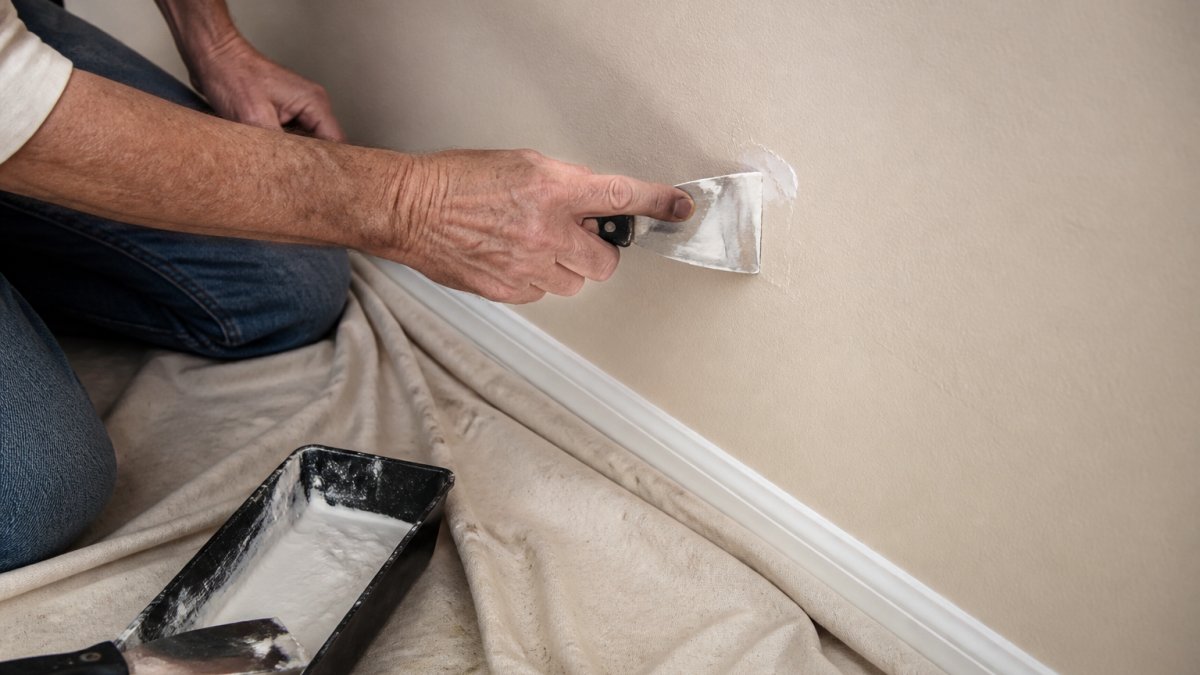
Patching a small hole in drywall takes about 30 minutes of active work across two short sessions, and the materials usually cost very little. The trick is patience between coats, not speed.
Step-by-Step: From Scraping to Paint-Ready
- Scrape loose material. Run the putty knife around the edges to remove crumbles and peeling paper.
- Clear the cavity. Knock out anything loose inside the hole so the patch sits flat.
- Apply the first coat. Press compound into the hole with the 3-inch knife. Let it dry fully.
- Add the patch. For holes wider than a coin, press a self-adhesive mesh patch over the area.
- Feather the edges. Spread a thin second coat wider than the first, then a third if needed. Feathering hides the repair.
- Sand smooth. Use fine grit with light pressure. Over-sanding is the most common mistake.
- Prime, then paint. Primer stops the compound from soaking up paint unevenly.
Expected result: a flat, paint-ready surface you cannot feel with a fingertip. If you can feel a ridge, add one more thin coat.
What Drywall Repair Cost Really Depends On
The cost of a drywall repair depends on four things: project size, whether water damage is involved, texture matching, and access. A single small hole is a quick job. A ceiling with a leak stain plus texture matching is a different project.
Pricing depends on the scope, and the honest answer is that every wall tells a different story. Ask for a quote in writing before work starts. We offer free estimates.
Watch for these cost drivers:
- Texture matching on ceilings and older walls
- Height and access (high ceilings need more setup)
- Water damage that requires cutting out and replacing sections
- Paint matching across a large visible area
A Realistic Materials Budget for a Small Repair
You do not need a truckload of supplies to fix a nail pop or a doorknob hole. Here is a shopping list that covers most minor repairs, with typical shelf prices at a home center. Prices vary by store and region, so treat these as planning figures, not quotes.
| Item | Typical size | Approximate price |
|---|---|---|
| Lightweight joint compound | 1-quart tub | $8-$12 |
| Self-adhesive mesh patch | 2-inch roll or 4-inch squares | $5-$9 |
| Drywall scrap or patch panel | 2 ft. x 2 ft. | $6-$10 |
| 3-inch putty knife | single | $6-$10 |
| 6-inch putty knife | single | $9-$14 |
| Sanding sponge (fine/medium) | 2-pack | $5-$8 |
| Primer | 1-quart | $10-$16 |
| Paint (matched) | 1-quart | $12-$25 |
| Dust mask and safety glasses | 2-pack | $8-$15 |
A realistic all-in materials total for one small patch is roughly $40-$80 if you are starting from zero tools, and $15-$30 if you already own a putty knife and sandpaper. That is the number to hold in your head before you call anyone.
What a Pro Typically Charges
Labor is the bigger variable. Most drywall contractors price small repairs by the job rather than by the hour. Larger patches, ceiling work, and texture matching push the price up because they take more time and more trips. When you compare quotes, ask each contractor whether paint is included. A quote that leaves paint out is not the same quote as one that includes it.
Repair or Replace? Deciding on Drywall Replacement
Replacement makes sense when the damage is structural, widespread, or wet. Repair wins for isolated holes and cosmetic cracks. A simple rule: if you can cover the damage with one hand, patch it. If the damage spans a whole panel or feels soft, replace that section.
Signs replacement is the better call:
- A large section is sagging or soft
- Water damage covers more than a small area
- Cracks run in a pattern across the whole wall
- The drywall is crumbling when you touch it
For older homes, expect surprises behind the wall. Layers of old paint and past patches can make a simple repair take longer. That is normal, not a red flag.
Senior Home Repair Assistance and Grant Eligibility
Help exists, but you have to know where to look. Senior home repair assistance programs vary widely by area, and grant eligibility depends on income, age, and the type of repair.
Where to start:
- Local area agencies on aging often keep lists of vetted repair help.
- City and county housing departments run home rehabilitation and weatherization programs.
- Nonprofit housing groups sometimes offer low-cost labor.
- Home buyer assistance programs can include repair funds.
Always verify a program before sharing personal details. Ask for the program's official website, confirm it is government or nonprofit-run, and never pay an upfront "application fee" to a stranger who calls you. The Consumer Financial Protection Bureau publishes plain-language guidance on spotting loan and repair scams aimed at homeowners.
Staying Safe and Steady During Repairs
Safety is the part most guides skip, and it matters most for older bodies. A fall off a step stool ends the project and the budget at once. Work at ground level whenever you can, and get help for anything above shoulder height.
A short safety checklist:
- Use a step stool with a handle, never a chair
- Keep the floor clear of tools and dust
- Wear a dust mask and glasses when sanding
- Take breaks every 20 minutes
- Ask someone to spot you on any ladder work
- Keep a phone within reach
If a repair needs a ladder and balance you do not trust, that is the moment to call a licensed contractor. There is no shame in it. An insured professional carries the risk so you do not.
Frequently Asked Questions
How can seniors repair small holes in drywall on a budget?
Start with a patch kit or a scrap of drywall, joint compound, and a putty knife. Scrape loose material, fill in thin layers, sand smooth, and match the texture before painting. A small hole often requires minimal material cost. If the damage is larger than a few inches or the wall feels soft, get a free quote from a licensed contractor before spending more on supplies.
When should you hire a professional for drywall repair?
Call a professional when the damage is larger than a dinner plate, when water damage has softened the drywall, or when the ceiling sags. Texture matching on ceilings and older homes is also hard to get right without experience. A licensed, insured contractor can confirm whether the issue is cosmetic or structural, and many offer free estimates so you know the drywall repair cost before committing.
Can you repair water-damaged drywall, or does it need to be replaced?
Small water stains that are dry and firm can often be sealed and repainted. Drywall that is soft, crumbly, or moldy needs to be cut out and replaced, and the leak must be fixed first. In older homes, repeated water damage can hide behind paint, so have it inspected before patching over it.
How can seniors find help paying for home repairs?
Check your state and local housing authority for home repair grants and weatherization programs, and ask about eligibility rules like age and income. Area Agencies on Aging can point you to senior home repair assistance. Always verify a contractor's license and insurance, get a fixed-price quote in writing, and never pay the full amount upfront.
Small wall repairs are within reach for most seniors, and the savings are real. But some jobs need steady hands, proper texture matching, and a clean finish. That is where The Drywall Expert comes in. We offer free estimates, senior and military discounts, and a focus on clean, precise work from start to finish. Our team has served homeowners since 1999, and we treat your home like our own. Get a free quote from The Drywall Expert and get your walls paint-ready without the stress.