 How-to
Popcorn Ceiling Removal Safety Precautions: 2026 Guide
Table of Contents
- Popcorn Ceiling Asbestos Testing: The Step You Cannot Skip
- Popcorn Ceiling Removal Protective Gear: What You Actually Need
- How to Prepare a Room for Popcorn Ceiling Removal
- Safe Removal Techniques: Wet Scraping and Dust Control
- Popcorn Ceiling Removal Cleanup: Sealing Debris and HEPA Vacuuming
- When to Hire a Licensed Asbestos Professional
- What to Do After Accidental Disturbance and Protecting Occupants
- Frequently Asked Questions
Last Updated: October 13, 2026
Popcorn Ceiling Asbestos Testing: The Step You Cannot Skip
Popcorn ceiling removal means scraping away a textured ceiling finish and preparing the surface for a smooth coat. The safety precautions you take before that first scrape matter more than the scraping itself.
The danger is not the texture but what may be inside it.
Before you buy a scraper, answer one question: is this ceiling safe to touch?
How to Know If Your Ceiling Might Contain Asbestos
Age is your first clue, not a verdict. The EPA asbestos in the home guidance explains that asbestos was common in many building materials before health rules tightened.
Check these signals:
- Home built or renovated before the 1980s
- Ceiling texture applied over drywall or plaster
- A textured finish that crumbles or powders when touched
None of these prove asbestos is present. Only a lab test can confirm it. Treat every older popcorn ceiling as suspect until testing says otherwise.
How to Test Popcorn Ceiling Material Safely
Asbestos testing is the only way to know for certain: a qualified inspector collects a small sample and sends it to a lab.
The safe process looks like this:
- Seal off the room with plastic sheeting and tape.
- Wear a HEPA-filtered respirator and eye protection.
- Mist a small area with water so fibers stay damp.
- Cut a small sample and place it in a sealed bag.
- Patch the spot and send the sample to an accredited lab.
Do not scrape, sand, or poke at the texture to "see what happens." That is how fibers get into the air. If you are unsure, stop and call a licensed abatement professional.
Popcorn Ceiling Removal Protective Gear: What You Actually Need
Popcorn ceiling removal protective gear is not optional, even for a small patch. If the ceiling tests clean, you still face fine dust from the texture and drywall. Your gear keeps that dust out of your lungs and eyes.
Skip the paper dust mask. It does not seal against fine particles.
Respiratory and Eye Protection
A HEPA-filtered respirator is the minimum. Look for a tight seal and change the filter as it loads with dust. Add sealed goggles or safety glasses, dust falls straight down, and your eyes are directly in its path. Contact lenses trap grit, so switch to glasses for the day.
Protective Clothing and Gloves
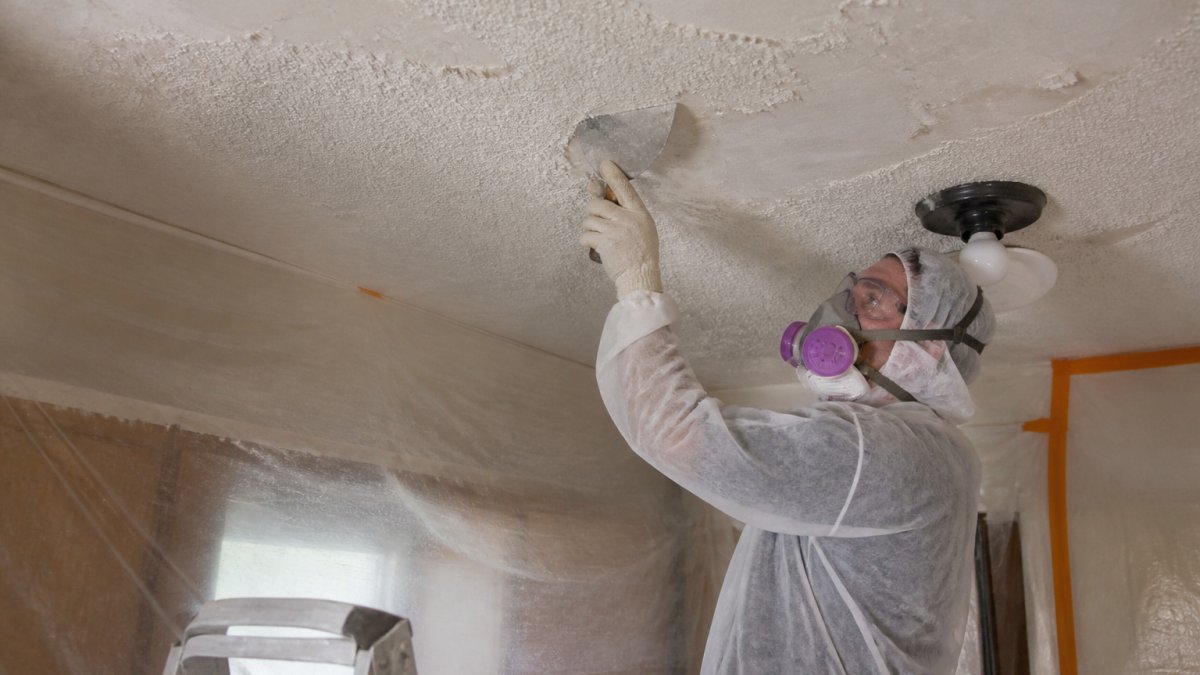
Disposable coveralls keep dust off your clothes and skin. Choose a hooded suit so debris does not fall down your collar.
Pair the suit with:
- Nitrile gloves for grip and skin protection
- Disposable shoe covers or boots you can wipe down
- A cap or hood to protect your hair
When work ends, peel the suit off inside the work area and bag it. Walking through the house in dusty clothes is how cross-contamination starts.
How to Prepare a Room for Popcorn Ceiling Removal
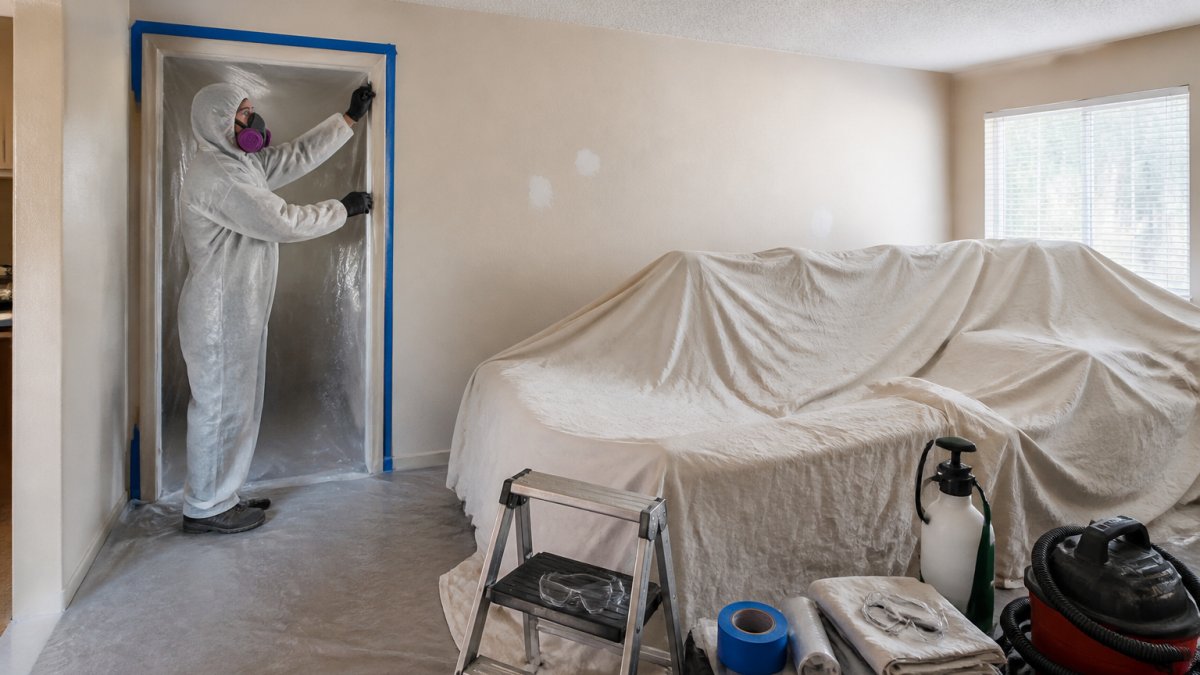
Preparing the room is where careful homeowners separate themselves from messy ones. Containment keeps dust in one place and protects everything you cannot move.
Furniture Removal and HVAC Shutdown
Clear the room first. Move furniture out if you can; if not, push it to the center and cover it with plastic sheeting.
Then turn off the HVAC system at the thermostat. The EPA guidance on HVAC systems and asbestos notes that heating and cooling systems can pull dust through a home.
Covering Floors, Walls, and Fixtures with Plastic Sheeting
Line the floor with plastic sheeting, not just drop cloths. Tape the edges up the walls a few feet to catch falling debris.
Cover these too:
- Light fixtures and ceiling fans
- Doorways with overlapping plastic flaps
- Any surface you cannot move
Seal the room like you mean it. A loose sheet of plastic is a dust spreader, not a barrier.
Safe Removal Techniques: Wet Scraping and Dust Control
Wet scraping is the core technique: moisture weighs down dust, while dry scraping sends fibers and fine dust straight into the air.
The steps:
- Fill a spray bottle with water and mist a small section.
- Let it soak for a few minutes until the texture softens.
- Slide a wide scraper under the texture at a shallow angle.
- Catch debris in a plastic-lined bucket or on sheeting below.
- Work in small sections, re-misting as you go.
Keep the surface damp, never dripping. Dry patches mean dust is escaping. Work from a stable ladder, and never overreach.
Popcorn Ceiling Removal Cleanup: Sealing Debris and HEPA Vacuuming
Cleanup is where most DIY jobs fail, and the rules change depending on what the lab found. A ceiling that tested clean means ordinary drywall dust; one that tested positive or was never tested means regulated waste and different cleanup rules.
Ordinary Cleanup When the Ceiling Tested Clean
Dust settles for hours after the last scrape, so a quick sweep sends it right back into the air. Work top to bottom and let gravity help.
Here is the sequence that works:
- Pick up large debris and seal it in heavy-duty waste bags. Do not overfill them.
- Wipe surfaces with a damp cloth, not a dry one. Rinse the cloth often.
- Run a HEPA vacuum over floors, walls, ledges, and the tops of door frames.
- Repeat damp wiping until cloths come up clean.
- Remove plastic sheeting carefully, folding dirty side inward, and bag it.
Never use a standard shop vac or household vacuum, their filters push fine dust back out. A HEPA vacuum is the minimum tool here.
Cleanup and Disposal When Asbestos Is Present
If testing confirmed asbestos, ordinary cleanup is not appropriate. Bagging debris in kitchen trash bags and setting it on the curb is illegal in most areas and endangers waste handlers.
A licensed abatement contractor handles this stage with:
- Sealed, labeled waste bags and drums
- Wet-wiping and HEPA vacuuming of all surfaces inside containment
- Negatively pressurized containment with HEPA air filtration
Disposal requirements vary by state and sometimes county. Your state environmental or health agency keeps the list of approved landfills and required paperwork.
Clearance Verification: When the Room Is Safe to Reoccupy
This is the step most homeowners never hear about. After abatement, a room is not considered clean just because it looks clean. Clearance testing confirms it.
A typical clearance process includes:
- Visual inspection of all surfaces inside containment
- Air sampling with a calibrated pump, often using phase contrast microscopy or transmission electron microscopy
- Comparison of results against the clearance standard your state or the project spec requires
The room can be reoccupied only after the clearance report passes. If it fails, the contractor recleans and retests. Do not let anyone talk you into skipping this step to save a day.
Checking Local Rules Before You Start
Asbestos rules vary by state and sometimes by city or county. Before any removal work, confirm three things with your state environmental or health agency:
- Whether a permit or notification is required before work starts
- Which landfills in your area accept asbestos-containing waste
- What packaging and labeling the disposal site requires
A quick call to your state agency before the first scrape saves you a failed inspection, a refused dump load, or a much larger cleanup bill.
When to Hire a Licensed Asbestos Professional
Hire a licensed abatement professional the moment testing confirms asbestos, or any time you are unsure. Removal by untrained hands risks occupant exposure across the whole home.
Professional abatement includes containment, regulated work practices, and proper disposal. As the OSHA asbestos standards make clear, asbestos work carries strict requirements for a reason.
How to Verify an Inspector or Abatement Contractor
Ask for credentials before anyone touches your ceiling. A legitimate contractor will answer every question without hesitation.
Check these items:
- State license or certification for asbestos work
- Proof of insurance and worker training
- A written scope covering containment and disposal
Get at least two written estimates and compare the scope, not just the price. If a contractor skips testing or shrugs off containment, walk away.
What to Do After Accidental Disturbance and Protecting Occupants
Accidental disturbance is the scenario most guides skip, and it is the one that causes the most panic. If you cut into a suspect ceiling, knock a chunk loose, or scrape a patch before testing, the response is the same: stop, isolate, and do not make it worse.
The First 30 Minutes After a Disturbance
Do not sweep, vacuum, or run a fan or open windows to "air it out." All of those actions lift settled fibers back into the air and spread them through the house.
Work through this sequence:
- Stop all work and set down your tools where they are.
- Keep everyone out of the room and close the door behind you.
- Shut off the HVAC system at the thermostat so it stops circulating air.
- If debris is still falling, mist it lightly with water from a spray bottle to weigh it down. Do not soak it.
- Leave the room, then remove your outer layer of clothing and bag it inside the doorway if you can.
- Shower and change clothes before moving through the rest of the home.
- Call a licensed asbestos professional to assess the space before anyone reenters.
A common pattern is for homeowners to grab a shop vac within the first few minutes. That is the single worst move.
Protecting Occupants, Pets, and Neighboring Rooms
Containment is not just about the work room. Fibers travel on air currents, on shoes, and on clothing, so the goal is to keep the disturbance zone from becoming a whole-house problem.
- Seal the doorway with overlapping plastic flaps taped at the top and sides. A single sheet taped flat is a dust spreader, not a barrier.
- Keep children, pregnant people, older adults, and pets out of the affected room and away from the doorway. These groups face the highest risk from airborne fibers.
- Close doors to adjacent rooms and seal HVAC vents and returns in the affected area with plastic and tape.
If the disturbance happened in a bedroom or a room a child uses, treat the space as off-limits until clearance testing says otherwise.
When the Disturbance Was Small
A small nick, a pinhole from a picture hanger, or a hairline crack is not the same as a full scrape, but it is not automatically safe either.
If testing comes back clean, you can repair the spot with standard joint compound and paint. If it comes back positive, a licensed abatement professional will tell you whether the damaged area can be encapsulated or needs full removal.
Alternatives to Removal Worth Asking About
Sometimes the safest precaution is not removing the ceiling at all. Ask a licensed professional whether one of these fits your home:
- Leave it undisturbed. An intact popcorn ceiling that tests positive for asbestos is often best left alone. Paint or seal it and monitor for damage.
- Encapsulation. A specialized coating seals the texture in place. This works only if the ceiling is intact and not water-damaged.
- Cover with new drywall. A new layer of drywall hides the texture without disturbing it. This adds weight and lowers ceiling height, so it is not right for every room.
Each of these options is unsuitable if the ceiling is crumbling, water-stained, or already damaged. In those cases, professional removal is the safer path.
Frequently Asked Questions
Should you test a popcorn ceiling for asbestos before removing it?
Yes. Popcorn ceilings installed before the 1980s often contain asbestos, and scraping releases airborne fibers that can lodge in the lungs. Testing is the only way to know. A licensed inspector takes a small sample and sends it to an accredited lab. If the result comes back as asbestos-containing material, do not scrape it yourself. Hire a licensed abatement professional. Testing costs far less than the health risk or the price of cleaning up a contaminated home.
What protective gear should you wear to remove a popcorn ceiling?
At minimum, wear a HEPA-filtered respirator, sealed goggles, disposable coveralls, and nitrile gloves. A standard dust mask does not block asbestos fibers. The respirator must be rated for fine dust and fit tightly around your face. Coveralls should have elastic cuffs and a hood, and you should tape the wrists and ankles. Change out of the gear before leaving the work area and bag it as waste. Without a confirmed negative asbestos test, do not scrape at all.
How do you prepare a room for popcorn ceiling removal?
Remove all furniture, then turn off the HVAC system and seal air vents with plastic sheeting and tape. Cover the floor with thick plastic drop cloths, and tape plastic up the walls to at least the ceiling line. Use masking tape around light fixtures and anything you cannot remove. Seal the doorway with a plastic flap so dust stays in the work area. This containment step keeps fine dust from spreading to other rooms and protects occupants and pets.
What should you do if you accidentally scrape a popcorn ceiling that may contain asbestos?
Stop immediately and leave the room. Close the door and shut off the HVAC system to keep fibers from circulating. Do not sweep or vacuum with a standard vacuum, which spreads airborne fibers. Contact a licensed asbestos professional to assess the contamination and perform safe cleanup. If occupants or pets were in the area, keep them out until clearance testing confirms the space is safe. Trying to clean it yourself with ordinary tools puts everyone at risk.
Popcorn ceiling removal safety comes down to testing first, containing dust, and knowing when to call a pro. If your ceiling tests positive for asbestos, or you simply want the job done right, The Drywall Expert is here to help. Our team brings over 20 years of experience, free estimates, and a focus on precision and cleanliness on every project. We also offer senior and military discounts. Get a free quote from The Drywall Expert and enjoy a smooth, safe ceiling.